
You want a clean pour-over that tastes like it should, and you can get there with a few simple habits and the right tools. A quick daily rinse plus a weekly deep clean removes oils, prevents mold, and keeps extraction consistent for better-tasting coffee. This article shows which supplies to use and how to clean each part so the brewer performs like new.
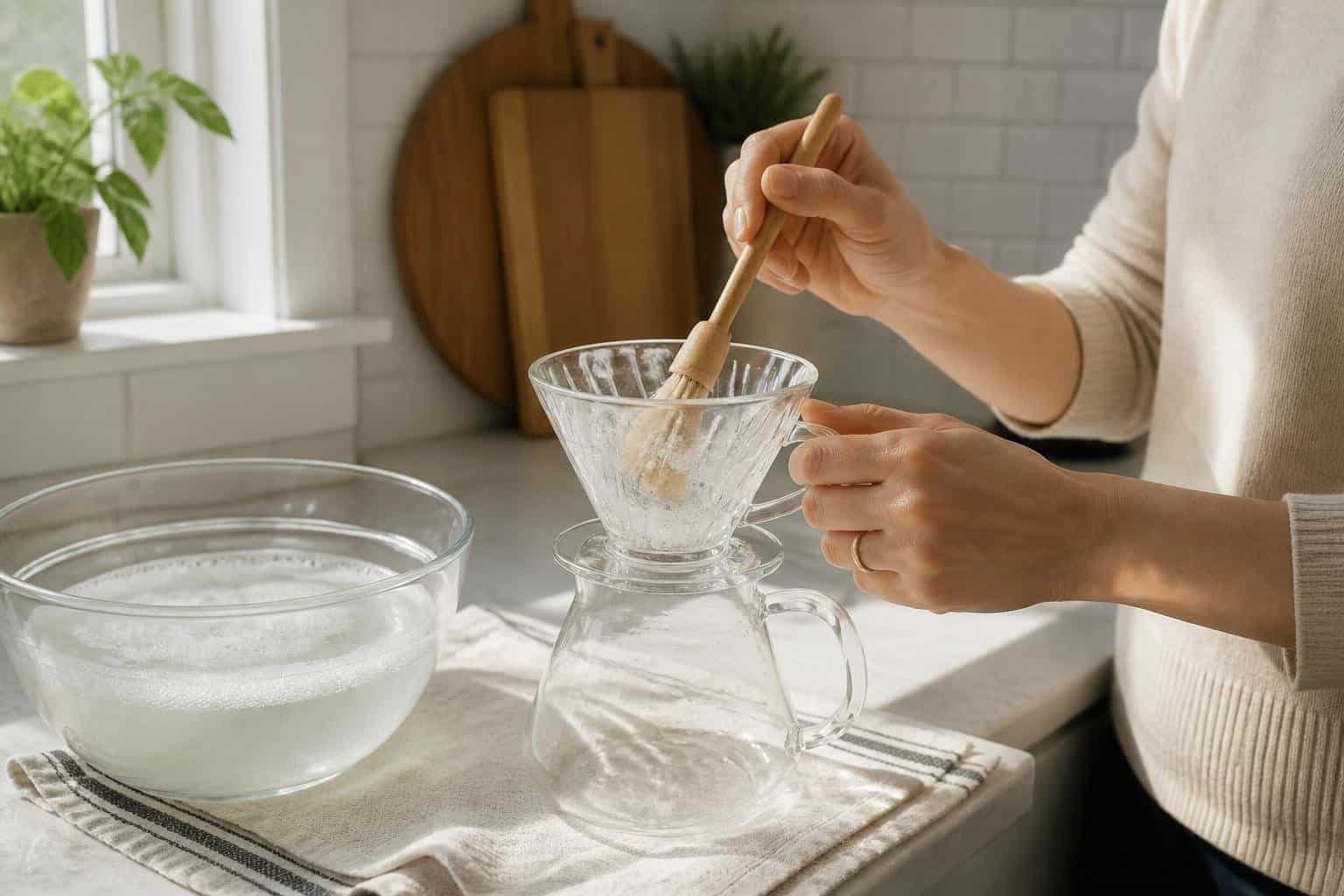
The steps cover routine rinsing, a full disassembly deep clean, filter and dripper care, and upkeep for carafes and accessories. Follow practical techniques to save time, prevent buildup, and enjoy a predictable cup every morning.
Essential Cleaning Tools and Materials
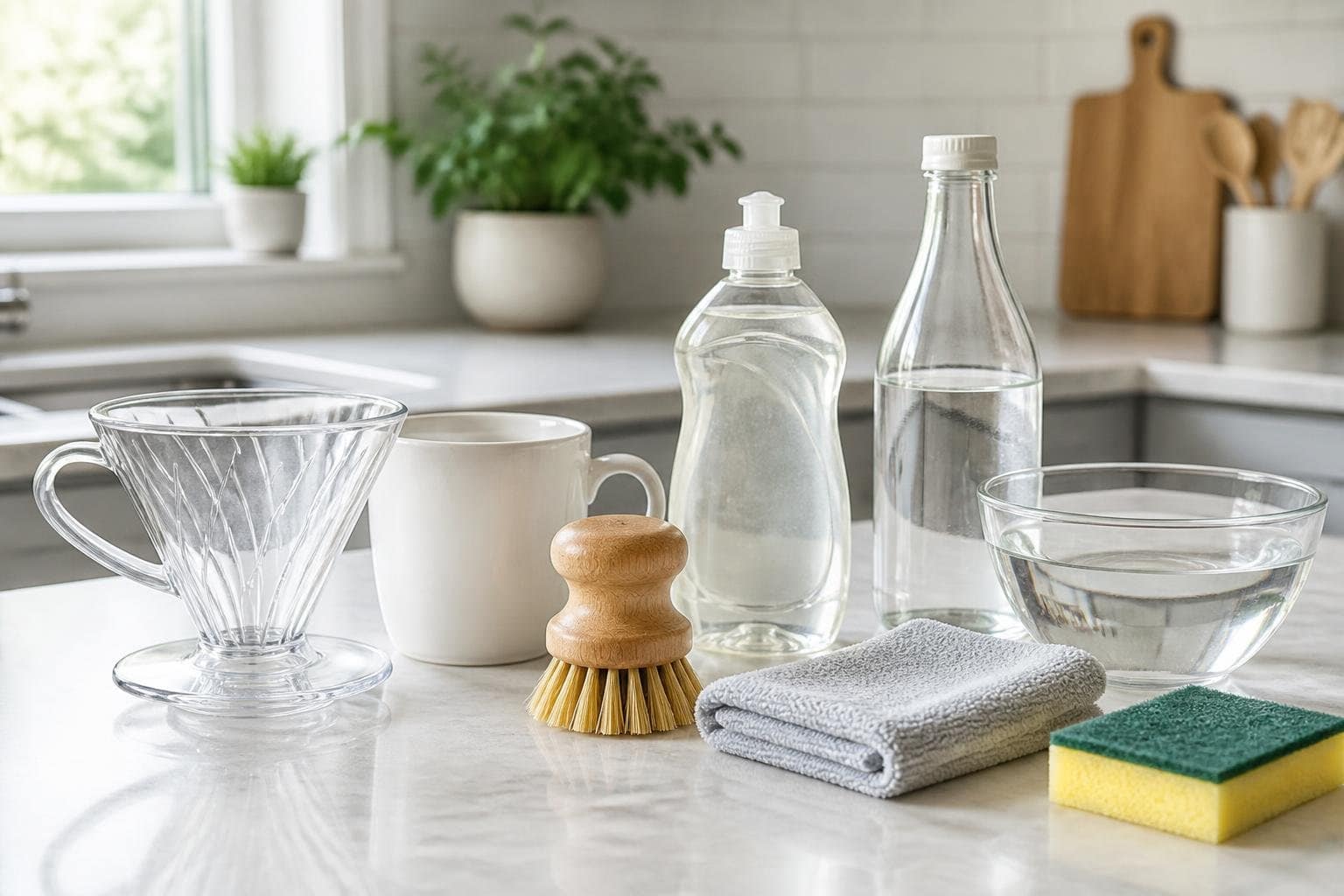
This section lists the specific products and simple techniques needed to keep a pour-over clean and performing well. It highlights why each item matters and how to use it safely and effectively.
Dish Soap and Its Role
Dish soap removes oils and coffee residue that build up on ceramic, glass, and plastic drippers. Use a mild, non-abrasive liquid dish soap; a single drop on a soft sponge with warm water is usually sufficient for a routine wash. Rinse thoroughly to avoid any soapy taste.
For hardened oils or stains, soak the dripper in warm soapy water for 10–20 minutes before scrubbing. Avoid powdered or bleach-containing detergents that can etch or discolor some materials. Heavier-duty degreasers are unnecessary and can leave residues.
When cleaning handles, lids, or spouts, use a small bottle brush or toothbrush with dish soap to reach crevices. Dry parts with a clean towel or air-dry upside down to prevent water spots and trapped moisture.
White Vinegar and Vinegar and Water Solution
White vinegar breaks down mineral scale and neutralizes lingering coffee oils on surfaces and in narrow channels. Prepare a vinegar and water solution of equal parts white vinegar and warm water for periodic deep cleaning. Use a 1:1 ratio for visible scale; dilute to 1:3 for more frequent maintenance.
Fill the dripper with the solution and let it sit 15–30 minutes, then scrub gently with a soft sponge or bottle brush. Rinse at least three times with hot water to remove vinegar smell; follow with a quick run of plain brewed water if needed to clear taste traces.
Avoid using vinegar on some metallic finishes without testing first, and never combine vinegar with bleach or chlorine cleaners. Store white vinegar in a cool, dry place and label the prepared solution if kept for short-term reuse.
Utilizing a Damp Cloth and Soft Sponge
A damp cloth handles daily wipe-downs and prevents residue buildup on outer surfaces and carafes. Use a microfiber or lint-free cloth dampened with warm water and a drop of dish soap when needed. Wipe immediately after use to stop oils from staining.
Soft sponges remove fresh grounds and light residue without scratching ceramic or glass. Use the sponge’s non-abrasive side; reserve scouring pads only for stainless steel parts rated as scratch-resistant. Squeeze excess water from the cloth or sponge to avoid excess moisture lingering in crevices.
For tight spots and spout lips, a damp cloth wrapped around a thin utensil or a small brush works best. Always air-dry parts on a rack or towel to prevent mold growth in damp corners.
Selecting Between Paper and Metal Filters
Paper filters trap oils and tiny grounds, producing a cleaner cup and requiring minimal cleaning—dispose used paper immediately. They reduce the need for degreasing because most coffee oils leave with the filter. Use bleached or unbleached paper based on taste preference; rinse a new paper filter briefly to remove papery flavor.
Metal filters (stainless steel or fine mesh) allow oils through and demand routine cleaning to prevent oil buildup. Rinse metal filters immediately after each use, then scrub with dish soap and a soft brush to clear trapped grounds. For stubborn oil residue, soak metal filters in a vinegar and water solution or a mixture of hot water and baking soda, then rinse thoroughly.
Inspect metal filters for holes or deformation and replace when clogging persists despite cleaning. Store dry paper and metal filters separately to keep them free of moisture and odors.
Step-by-Step Cleaning Process
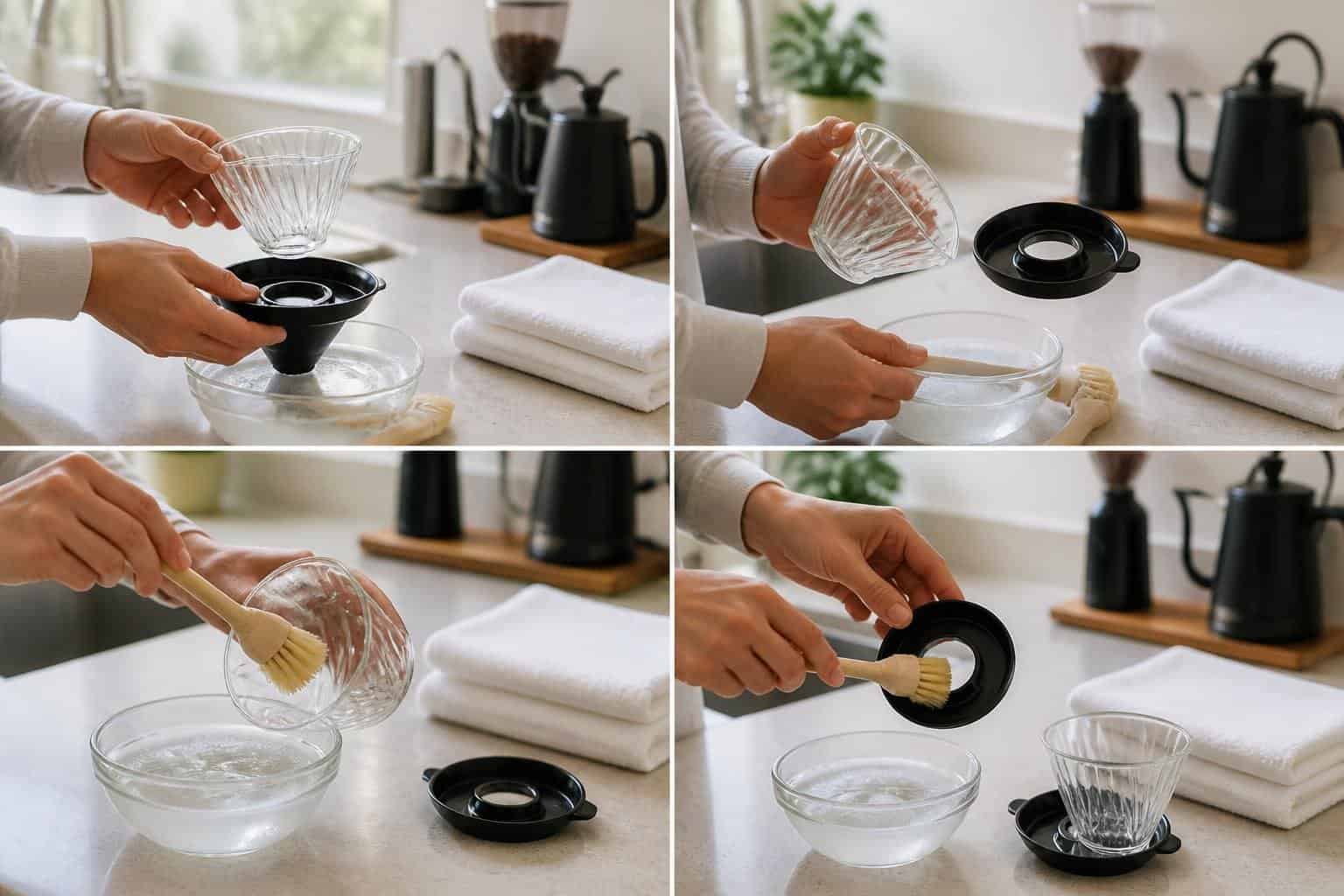
Hand-washing and quick rinses remove grounds and oils before they harden. A short daily rinse plus a weekly deep wash keeps the dripper tasting clean and prevents buildup.
Disassembly and Preparation
They should start by cooling the dripper and discarding used grounds and the paper or metal filter. Tap out the puck into a compost or trash, then blow or brush loose grounds from the spout and cone to avoid clogging drains.
Next, separate all removable parts: cone/dripper, filter holder, carafe or server, and any reusable metal or cloth filter. Remove silicone gaskets or rubber rings if the model includes them; these trap oils and need attention.
Gather supplies: mild dish soap, a soft sponge or brush, a damp cloth, white vinegar for descaling, and a bowl of warm water. Lay a towel on the counter to keep small parts from rolling away during cleaning.
Daily Rinsing Routine
After each brew, they should rinse the dripper and carafe with hot water immediately to wash away coffee oils. Use running water and a quick swirl with a soft brush to dislodge trapped fines from the cone’s corners.
For reusable filters, they should flip and tap them under running water to remove grounds, then gently rub with fingers and a drop of dish soap if oily. Paper filters get discarded; never attempt to reuse them.
Wipe the exterior and base with a damp cloth to remove splashes and spots. Air-dry parts on a rack or towel with the dripper upside down to keep moisture from collecting under gaskets.
Washing Components Thoroughly
Once a week or after encountering persistent oiliness, they should perform a deep wash. Fill a basin with warm water, add a teaspoon of mild dish soap, and soak ceramic, glass, or metal parts for 5–10 minutes.
Use a soft brush or nonabrasive sponge to scrub the interior surfaces, paying attention to lip edges, spout openings, and the filter seat where oils collect. For metal meshes, run a toothbrush along the weave to clear trapped particles.
To remove mineral scale, they should mix equal parts white vinegar and hot water, soak for 15–30 minutes, then rinse thoroughly. After any vinegar soak, wash with dish soap to remove residual acidity and then rinse until no odor remains.
Reassembly and Final Checks
They should reattach any silicone gaskets and dry each part with a clean, dry cloth before reassembly to prevent trapped moisture. Ensure rubber seals sit flush and that the cone aligns with any notches on the server.
Run a final hot-water rinse through the assembled system to check flow and to remove any remaining suds or loose debris. Inspect for stray grounds, sticky spots, or vinegar smell; repeat a targeted scrub if needed.
Store the dripper uncovered in a dry place to allow air circulation. For long-term storage, remove rubber parts and store them separately to avoid compression and mildew.
Deep Cleaning and Stain Removal
Deep cleaning targets sticky coffee oils, visible stains on glass or ceramic, and mineral scale inside kettles or carafes. Use mild detergents for grease, a vinegar-and-water mix for scale, and gentle scrubbing tools to protect surfaces.
Removing Coffee Oils and Residue
They should disassemble the dripper, remove filters, and rinse all parts in hot water to loosen oils. Next, they wash components with warm water and a few drops of mild dish soap; use a soft brush or sponge to reach grooves and the spout area. For stubborn oily buildup, they soak parts for 15–30 minutes in a solution of one tablespoon of baking soda per cup of warm water before scrubbing.
They should avoid abrasive pads on glass or metal finishes. For fixed plastic or silicone pieces, a soft-bristle brush prevents scratching while removing trapped oils. Rinsing thoroughly under hot running water removes soap and residual oils that can taint future brews.
How to Remove Coffee Stains
They treat visible stains in the carafe or dripper with a paste of baking soda and a few drops of water, applying directly to stained areas and gently scrubbing with a soft cloth. For glass carafes, a diluted vinegar rinse—one part white vinegar to three parts warm water—helps lift brown residues without harsh chemicals.
For fabric or paper filter stains (if reusing cloth filters), they soak cloth in a vinegar-and-water solution for 30 minutes, then launder with mild detergent. They should always rinse thoroughly after stain treatment to remove vinegar smell. If stains persist on ceramic, repeating the vinegar soak or using a commercial coffee-stain cleaner designed for food-contact surfaces works well.
Effective Scale Removal Techniques
They remove mineral scale with a vinegar-and-water solution: combine equal parts white vinegar and water, fill the carafe or kettle, and let it sit for 30–60 minutes. For internal passages in cone drippers or kettles, pour the solution through slowly to contact all surfaces, then flush with several cycles of clean water.
For heavy scale, they repeat the soak or use a commercial descaler following the manufacturer’s instructions. After descaling, they run two full rinses with fresh water and one brew cycle using only water to ensure no vinegar taste remains. For prevention, they recommend using filtered water or repeating a mild vinegar descale every 4–8 weeks depending on local water hardness and brew frequency.
Cleaning the Filter and Dripper
Keep the filter and dripper free of oils, grounds, and mineral deposits to preserve flavor and water flow. Focus on removing trapped grounds, rinsing oils away, and avoiding thermal shock for ceramic or glass pieces.
Paper Filter Care
Paper filters are single-use, but stored cleanly they stay ready for brewing. Discard the used filter and grounds immediately after brewing to prevent stale oils and mold. If pre-rinsing a fresh paper filter, rinse with hot water for 10–15 seconds to remove paper dust and warm the dripper; this improves extraction and prevents papery taste.
For reusable storage, keep unopened paper filters in a dry, airtight container away from direct sunlight and humidity. If a paper filter has been accidentally reused, it will trap more oils and impart bitterness; discard it. To remove coffee stains from a countertop caused by a wet paper filter, blot with a damp cloth and mild dish soap—no heavy scrubbing required.
Cleaning a Metal Filter
Metal filters trap oils that paper filters would remove, so regular cleaning keeps coffee tasting clean. Rinse the metal filter under running hot water immediately after use to flush grounds. Use a soft brush and mild dish soap to scrub the mesh gently, working from both sides to dislodge lodged particles.
For deeper cleaning, soak the metal filter in a solution of 1 part white vinegar to 3 parts hot water for 15–30 minutes to dissolve oils and mineral film. Rinse thoroughly afterward until no vinegar smell remains. For stubborn stains, make a paste of baking soda and water, rub gently with a soft brush, then rinse. Dry the filter fully on a rack before storage to prevent rust or mildew.
Maintaining the Dripper
The dripper requires attention to both interior surfaces and the spout or exit holes to keep flow consistent. After each brew, dump grounds and rinse the dripper under hot water, using a soft brush to reach grooves or wave patterns. For plastic drippers, avoid abrasive pads that can scratch; for ceramic or glass, avoid sudden temperature changes to prevent cracking.
Perform a weekly deep clean by soaking the dripper in hot water with a tablespoon of baking soda or a 1:4 vinegar solution for 15 minutes to lift oil stains and mineral residue. Use a soft toothbrush to remove coffee stains from narrow channels, then rinse and air dry. For instructions tailored to common dripper types and materials, consult a guide on caring for ceramic, glass, and metal drippers at suddencoffee.com/pour-over-equipment-cleaning.
Maintaining Carafes and Accessories
Keep carafes and accessories free of old coffee oils and mineral buildup. Regular rinsing after use and a monthly deep clean prevent off-flavors and stains.
Cleaning Glass and Thermal Carafes
They should be rinsed immediately after each brew to stop oils from setting. Use warm water and a few drops of mild dish soap; swirl gently and rinse until no suds remain.
For stains or mineral deposits, fill the carafe with a 1:1 vinegar-and-water solution and let it sit 15–30 minutes. Scrub with a soft brush or non-abrasive sponge, paying attention to the lip and pour spout, then rinse thoroughly to remove vinegar smell.
For stubborn residue, make a paste of baking soda and water, apply to stained areas, and scrub lightly. Avoid abrasive cleaners or steel wool on glass or insulated surfaces to prevent scratches and damage to thermal seals.
Dry glass carafes upside down on a drying rack. For thermal carafes, leave the lid off to air dry fully to prevent trapped moisture and odors.
Pour Over Coffee Maker Stand and External Parts
They benefit from a quick daily wipe to remove drips and grounds. Use a microfiber cloth dampened with warm, soapy water for the stand, funnel, and any exterior surfaces; avoid soaking electrical components if present.
Disassemble removable parts like drip trays, filter baskets, and lids for weekly cleaning. Soak plastic or metal parts in warm, soapy water for 10–15 minutes, rinse, and dry completely before reassembly. If a part shows mineral buildup, use a vinegar soak (1:1) for 15 minutes then scrub.
For metal or chrome finishes, polish with a soft cloth to prevent water spots. If the pour-over system is integrated into a drip coffee maker, follow the manufacturer’s directions for descaling the reservoir and protecting internal seals from vinegar damage. Clean rubber gaskets gently and replace them if they warp or crack.
Routine Care for Consistent Brewing
Daily rinsing, quick scrubs, and periodic descaling keep flavors clean and equipment reliable. Small habits—emptying grounds, rinsing the dripper, and drying parts—prevent oil and mineral buildup that dulls extraction.
Daily Maintenance Tips
They should empty used grounds and rinse the filter holder and carafe immediately after each brew. Used paper filters and wet grounds harbor oils and acids; removing them prevents stale flavors and makes washing easier.
They should rinse the dripper and carafe with hot water and use a soft brush or sponge with mild dish soap when visible oils remain. For ceramic or glass drippers, a quick wipe avoids scratches; for metal or stainless-steel components, use non-abrasive pads.
They should air-dry parts completely before storage. Damp nooks invite bacteria and off-odors. A clean towel or a short dish-rack cycle speeds drying and keeps the pour-over apparatus ready for the next brew.
Preventing Mold and Buildup
They should rinse and fully dry the brewer and any reusable filter after every use to stop mold growth. Reusable cloth or metal filters trap fines and oils; rinse them under running hot water and tap out trapped grounds immediately.
They should deep-clean reusable filters weekly by soaking in a solution of 1 tablespoon baking soda per cup of warm water, then rinsing thoroughly. For metal mesh filters, scrub with a soft brush to remove trapped oils; for cloth filters, boil or steep in hot water occasionally to sanitize.
They should descale the dripper and kettle every 1–3 months depending on local water hardness. Mix equal parts white vinegar and water, run through the kettle or soak the dripper for 15–30 minutes, then rinse thoroughly to remove mineral deposits that affect flow and taste. For guidance on descaling frequency and methods, see this detailed cleaning guide for pour-over equipment (https://www.menehunecoffee.com/how-to-clean-pour-over-coffee-maker-daily-deep-clean/).
Ensuring the Perfect Pour Over Experience
They should start with freshly roasted beans ground to a medium-fine size suited to the dripper’s flow rate. Consistent grind and dose stabilize extraction and keep flavors bright.
They should use filtered water heated to 92–96°C (197–205°F) and rinse the paper filter before brewing to remove paper taste and preheat the dripper. Bloom for 30–45 seconds with twice the brew weight in water to degas the grounds, then pour in steady concentric circles to maintain even extraction.
They should monitor total brew time—typically 2.5–4 minutes depending on dripper and grind. If the brew runs too fast, they should fine-tune the grind; if too slow or bitter, coarsen it slightly. Small adjustments deliver a consistently better pour-over coffee.
Best Practices for Longevity
They should store all parts dry and disassembled when not in use to avoid trapped moisture. Silicone gaskets and lids should be removed occasionally to inspect seals for wear.
They should replace reusable filters and paper filters as needed: cloth filters may need replacing after months of use, metal filters can last years with proper cleaning, and paper filters should be used once. Track replacement intervals in a simple log to avoid forgotten wear.
They should avoid harsh abrasive cleaners and dishwasher cycles unless the manufacturer explicitly allows them. Gentle cleaning and regular descaling preserve finish, maintain flow characteristics, and extend the effective life of the pour-over setup.